What Is Polyurea Coating for Concrete — and Why Does It Matter?
Polyurea coating for concrete is a fast-curing, high-strength protective layer formed by a chemical reaction between an isocyanate and an amine-terminated resin. Here’s a quick summary of what makes it stand out:
| Feature | Polyurea |
|---|---|
| Strength | ~4x stronger than epoxy |
| Cure time | Walkable in 4-6 hours, drivable in 24 hours |
| UV stability | Yes (aliphatic formulas won’t yellow) |
| Moisture resistance | Fully waterproof |
| Lifespan | 15-20+ years |
| Cost | $6-$10 per sq. ft. professionally installed |
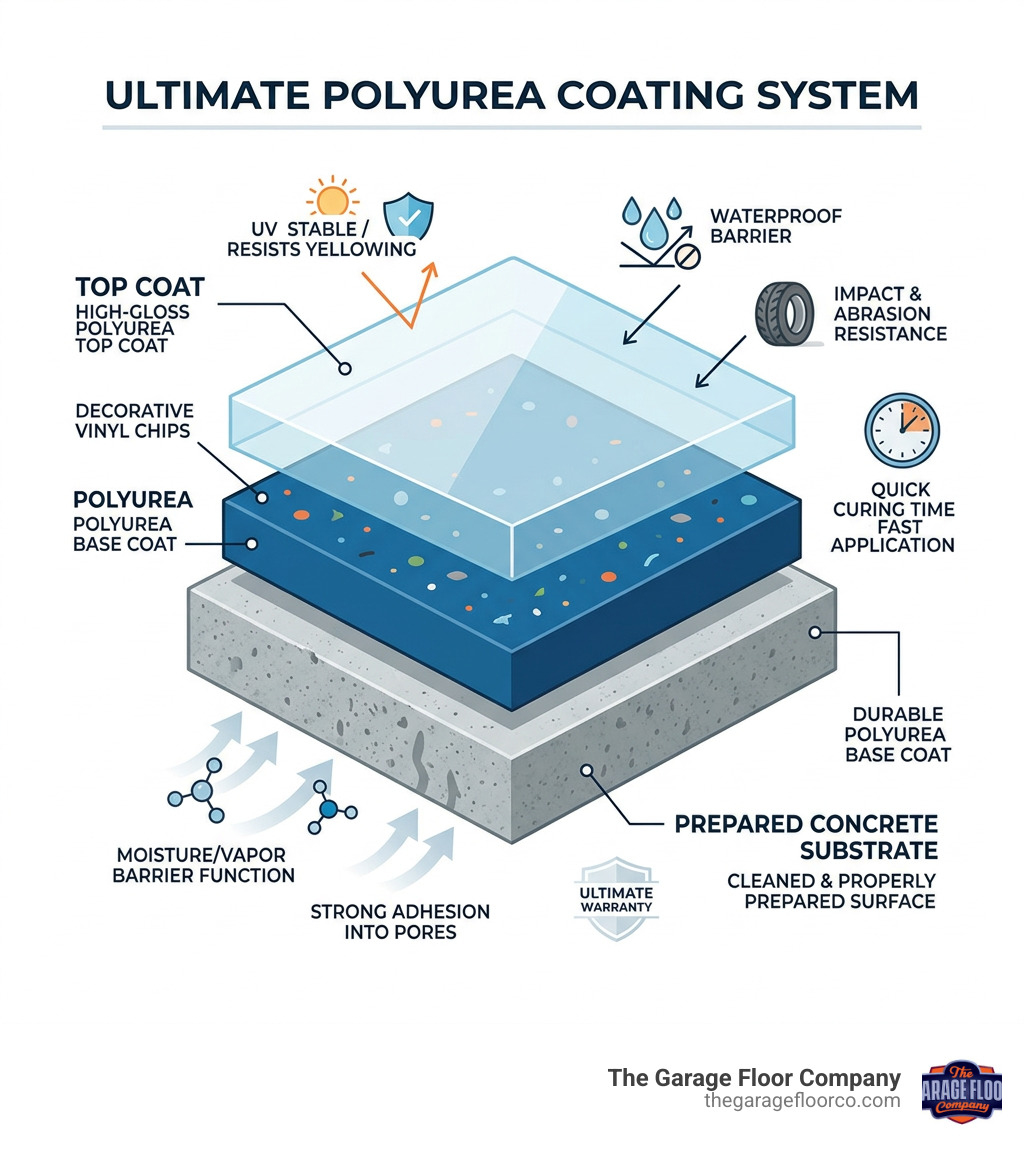
Most garage floors take a beating — oil drips, road salt, hot tires, and moisture slowly break down bare or poorly coated concrete. Standard epoxy coatings chip, yellow, and peel within a few years. Polyurea bonds directly into the concrete’s pores, creating a seamless, flexible shield that moves with the slab instead of cracking away from it.
That’s why more homeowners and contractors are making the switch.
I’m Jeff Gannon, owner of The Garage Floor Company, and I’ve spent years installing high-performance polyurea coating for concrete in garages, workshops, and commercial spaces — backed by a 15-year warranty and a process built around proper prep and long-lasting results. In this guide, I’ll walk you through everything you need to know to make a confident decision for your floor.
Why Choose Polyurea Coating for Concrete?
When we talk to homeowners in Omaha, Lincoln, or Phoenix, the first question is usually: “Why shouldn’t I just use the epoxy kit from the big-box store?” The answer lies in the chemistry. Polyurea coating for concrete is an elastomer, meaning it has incredible flexibility. While epoxy is rigid and brittle, polyurea can stretch.
Superior Strength and Flexibility
Research shows that polyurea systems are approximately 4x stronger than traditional epoxy. Because it has higher tensile strength, it doesn’t just sit on top of the concrete; it penetrates the pores. This creates massive delamination resistance, preventing the top surface from separating from the underlying slab. In regions like Indianapolis or Cincinnati, where temperatures swing wildly, this flexibility allows the coating to expand and contract with the concrete without cracking.
Resistance to Real-World Abuse
Our floors face a gauntlet of “floor killers” every day:
- Hot Tire Pickup: This happens when tires get hot from driving, park on a cool floor, and literally pull the paint off the concrete as they cool and shrink. Polyurea is chemically resistant to this bond, meaning your tires won’t peel up your floor.
- Chemical Spills: Whether it’s oil, gasoline, or brake fluid, polyurea acts as an impermeable shield.
- Road Salt: In our Midwest locations like Papillion and Gretna, winter salt can eat through concrete. Polyurea provides a waterproofing barrier that keeps salt and moisture from reaching the substrate.
| Comparison Metric | Polyurea/Polyaspartic | Standard Epoxy |
|---|---|---|
| Hardness (Shore A) | ~87 | Lower/Brittle |
| Return to Service | 24 Hours | 5-7 Days |
| UV Resistance | High (Aliphatic) | Low (Yellows) |
| Flexibility | Triple the Elongation | Minimal |
Polyurea vs. Polyaspartic: Understanding the Differences
There is often a lot of confusion online regarding these two terms. To put it simply: all polyaspartics are polyureas, but not all polyureas are polyaspartic.
The Science of Polyaspartic Esters
A polyaspartic is a “hindered” polyurea. Traditional polyurea cures in seconds—literally 2 to 5 minutes—which requires high-pressure spray equipment. Polyaspartic coatings have a slowed-down cure rate, typically ranging from 10 to 45 minutes, according to Corrosionpedia. This gives our crews the “pot life” needed to apply the coating by hand with rollers, ensuring a perfectly even finish.
UV Stability and Aesthetics
One of the biggest flaws of aromatic polyurea and epoxy is that they “amber” or yellow when exposed to sunlight. If your garage in Scottsdale or Tempe has windows or you often leave the door open, UV rays will ruin a standard floor. We use aliphatic compounds in our topcoats, which are 100% UV stable. This means your floor stays the same color for the next 20 years.
We also utilize 100% solids content. This means that when we apply the liquid, there are no solvents evaporating into the air. What goes on the floor stays on the floor, resulting in a thicker, more durable dry film.
The Professional Installation Process
At The Garage Floor Company, we don’t believe in shortcuts. A polyurea coating for concrete is only as good as the preparation beneath it.
Step 1: Surface Preparation and Moisture Testing
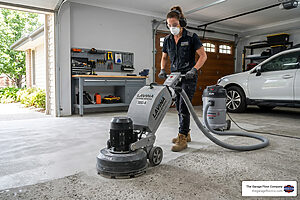
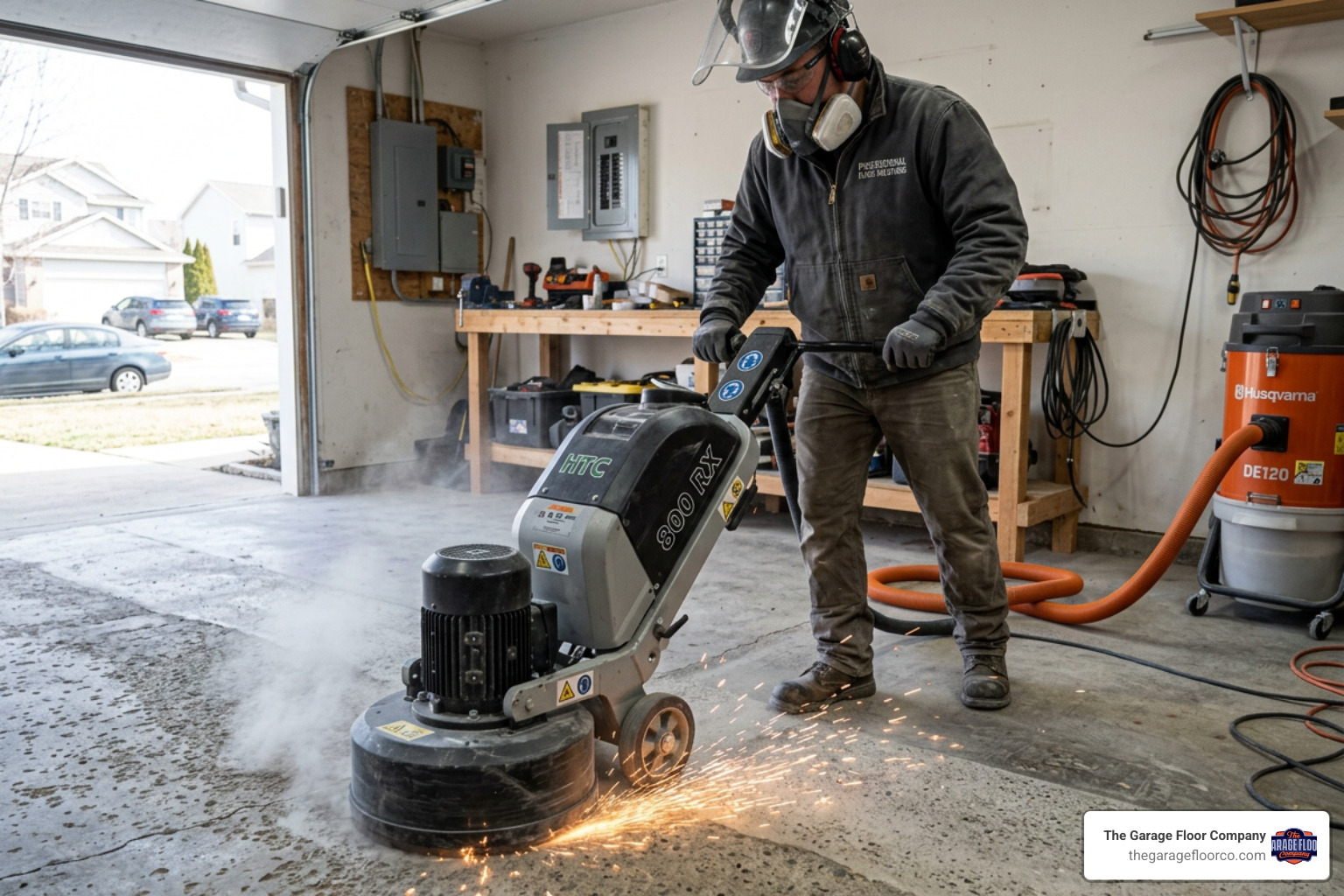
We start by diamond grinding the entire surface. This isn’t just a light sanding; we use heavy industrial grinders to “open” the pores of the concrete. This creates a profile (think of it like Velcro) that allows our garage flooring service to bond permanently. We also perform moisture testing to ensure the slab isn’t holding too much water, which could cause bubbles later.
Step 2: The Base Coat and Decorative Flakes
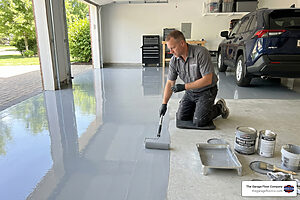
Once the floor is prepped and cracks are repaired, we apply our proprietary moisture vapor barrier basecoat. This is a critical step that many “one-day” companies skip. While the base coat is wet, we broadcast decorative flakes to rejection. This means we cover every inch of the floor until no more flakes can stick. This adds texture, thickness, and a beautiful aesthetic.
Step 3: Scraping and Top Coat
After the base coat has cured, we scrape off the excess flakes to ensure a smooth, uniform surface. Finally, we apply a high-solids polyaspartic clear topcoat. This layer provides the final shield against chemicals and abrasion. If you’re worried about slips, we can apply a non-skid finish by adding slip-resistant aggregates into this final layer.
Performance Features and Ideal Applications
While many people think of garages first, a polyurea coating for concrete is versatile enough for almost any environment.
Residential and Commercial Versatility
- Garages: The gold standard for durability and what polyurea garage floor coating is all about.
- Commercial Spaces: Retail stores in Nashville or showrooms in Phoenix benefit from the rapid 24-hour return to service, minimizing business downtime.
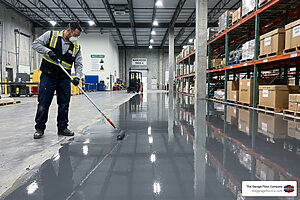
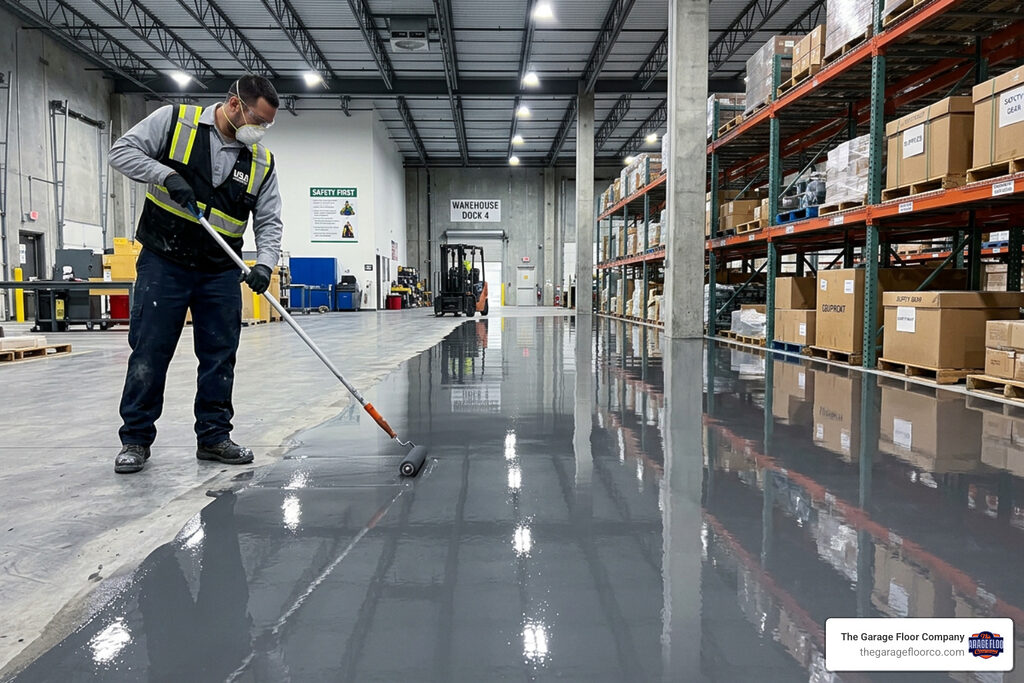
- Industrial Warehouses: In heavy-duty settings, polyurea systems can be applied at a total film thickness of 3000-4500 μm to handle forklifts and heavy machinery.
- Outdoor Patios and Pool Decks: Thanks to UV stability and temperature tolerance (handling -40°F to 350°F), it’s perfect for the Arizona sun or the Wisconsin cold.
VOC Compliance and Safety
We take safety seriously. Our coatings are compliant with strict environmental regulations, including South Coast Air Quality Management District Rules. We prioritize low-odor, VOC-compliant formulas so you can breathe easy in your home shortly after we finish the job.
Frequently Asked Questions
How long does polyurea coating for concrete last?
A professionally installed polyurea coating for concrete typically lasts 15 to 20 years in a residential setting, though many high-quality systems can push past 30 years with basic maintenance. The key to this lifespan is the bond to the concrete. Unlike DIY paints that sit on the surface, polyurea becomes part of the floor. We back our work with a 15-year warranty to give you peace of mind. To keep it looking new, we recommend a simple non-slip cleaning routine involving regular sweeping and occasional mopping with a gentle cleanser.
Is a polyurea coating for concrete better than epoxy?
In almost every measurable category, yes. Polyurea is 4x stronger and significantly more flexible, which prevents the cracking and peeling common with custom epoxy garage floors. The most significant advantage is the “return to service” time. While epoxy requires you to keep your cars off the floor for 5 to 7 days, a polyurea floor is walkable in 4 to 6 hours and fully drivable in just 24 hours.
Can I apply these coatings as a DIY project?
We generally advise against it. While there are “DIY kits” available, they are often single-component products that don’t offer the same industrial strength as a two-part professional system. True polyurea and polyaspartic resins cure extremely fast. If you aren’t trained in the mixing ratios and application timing, you can end up with a sticky mess or a floor that peels in six months. Professional installation also includes safety coating measures and industrial diamond grinding that a rental machine simply can’t match.
Conclusion
Investing in a polyurea coating for concrete is about more than just a pretty floor; it’s about long-term ROI and protecting your home’s foundation. Whether you are in Omaha, Tempe, or Indianapolis, our goal at The Garage Floor Company is to provide a surface that is as tough as it is beautiful.
Maintaining your new floor is a breeze—usually just a quick sweep and a damp mop is all it takes to keep that high-gloss finish looking stellar. If you’re ready to learn more about what is polyurea garage floor coating and how it can transform your space, reach out to us today. We’d love to help you launch your garage into a new dimension of durability.